4 min read · Updated 28 October 2026 · By the HotelGoGo editorial team
The Cotswolds are rolling limestone hills stretching across several counties in south-central England, chiefly Gloucestershire and Oxfordshire. The area is a designated National Landscape (formerly an Area of Outstanding Natural Beauty) and one of the largest protected landscapes in England. Its villages and market towns, built from the warm, honey-coloured local stone, grew wealthy on the medieval wool trade, which explains the grand churches you will find even in small places. It is gentle, beautiful countryside made for slow weekends, walking and pub lunches. This guide helps you choose a base.
The northern Cotswolds
The north is where many of the most famous villages cluster. Chipping Campden, with its curved high street and seventeenth-century Market Hall, is one of the best-preserved market towns in the region, and it marks the northern end of the Cotswold Way, a national trail of around a hundred miles that runs south to Bath. Broadway, below the Broadway Tower folly, is elegant and popular. Stow-on-the-Wold, the highest town in the Cotswolds, has a large market square ringed by inns and antique shops, and nearby are the pretty villages of Lower Slaughter and Upper Slaughter.
Bourton-on-the-Water
Often called the Venice of the Cotswolds, Bourton-on-the-Water has the River Windrush flowing through its centre beneath a series of low stone bridges. It has attractions including a model village and a motor museum, and it is one of the region's busiest villages on summer days. Staying overnight lets you enjoy it in the quiet of the early morning and evening, after the day visitors leave. Browse places to stay in Bourton-on-the-Water.
The southern Cotswolds and Cirencester
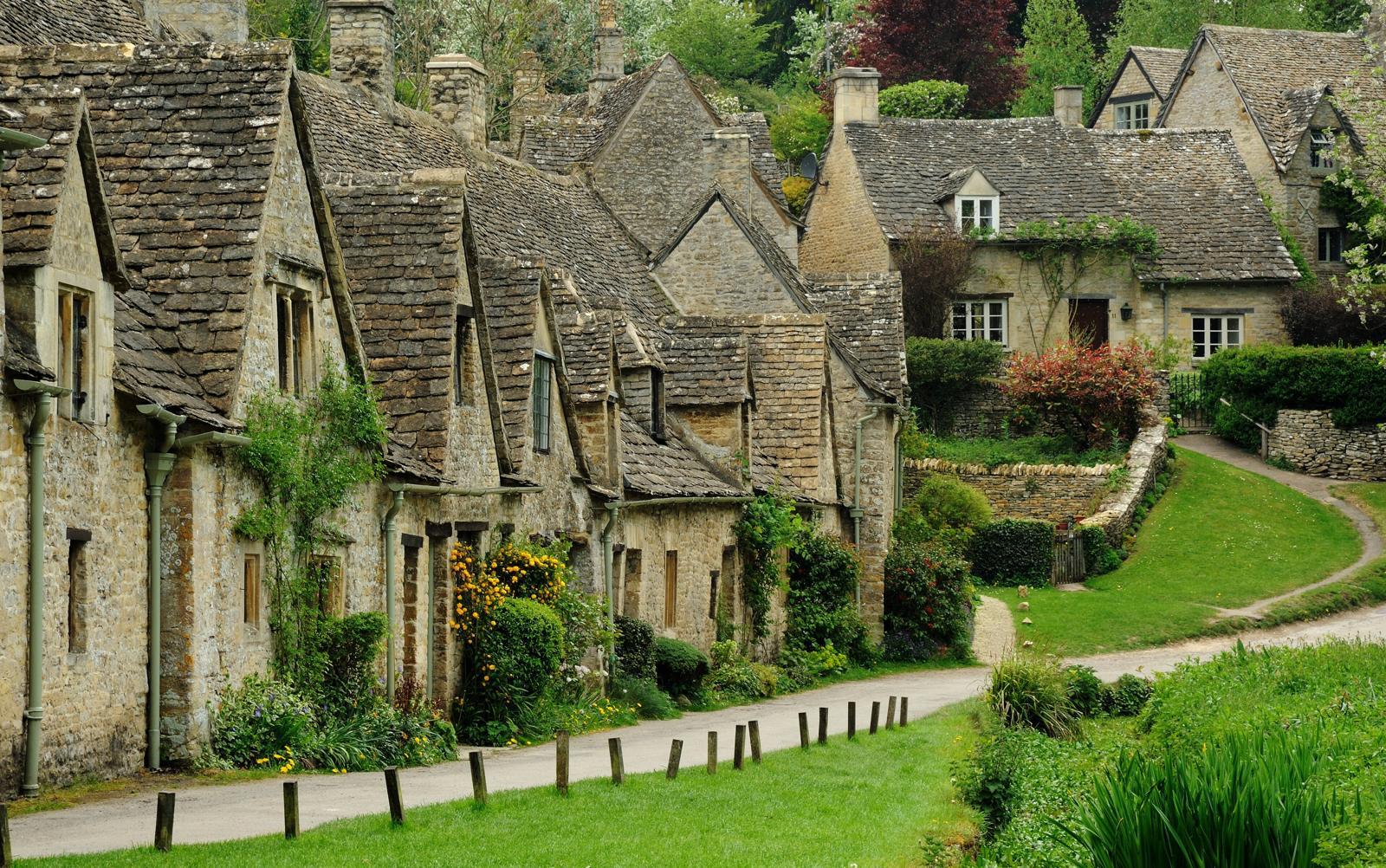
Cirencester is the largest town within the Cotswolds and was an important Roman town known as Corinium; its Corinium Museum displays Roman mosaics and finds. The parish church of St John the Baptist is one of the largest in England, a testament to wool wealth. Cirencester is a lively, practical base with good shops and restaurants. Nearby, Bibury's Arlington Row, a row of weavers' cottages, is one of the most photographed scenes in England. Further south, towns such as Tetbury and Malmesbury lead on towards Bath. Browse Cirencester listings.
Cheltenham
On the western edge of the hills, Cheltenham is a Regency spa town with wide tree-lined promenades, elegant terraces and a busy calendar of festivals celebrating literature, music, jazz and science. Cheltenham Racecourse hosts the famous jump racing Festival in March, when accommodation across the region books up far ahead. Cheltenham is well served by trains, making it a useful base for anyone without a car. See stays in Cheltenham.
The eastern Cotswolds
On the Oxfordshire side, Burford slopes down a steep high street to the River Windrush, and Woodstock sits at the gates of Blenheim Palace, a UNESCO World Heritage Site and the birthplace of Winston Churchill. Oxford, just beyond the Cotswolds, is close enough for a day trip; see our UK city breaks guide.
Walking and outdoors
The Cotswolds are criss-crossed with public footpaths linking village to village, many passing pubs along the way, which makes them perfect for gentle day walks. The Cotswold Way follows the western escarpment with wide views over the Severn Vale. Remember the Countryside Code: close gates, keep dogs under control near livestock and stick to paths.
When to visit
Summer is beautiful but busy, especially in the most famous villages, and lanes can be congested. Spring and autumn are lovely for walking, and winter brings cosy inns with log fires. Major events such as the Cheltenham Festival can fill accommodation across a wide area.
Getting there and around
Trains from London Paddington serve Moreton-in-Marsh, Kingham and Charlbury on the Cotswold Line, and Kemble near Cirencester, while Cheltenham Spa has connections to the Midlands and the South West. Public transport between villages is limited, so most visitors drive or cycle, and some use local taxis to reach walking routes.
Food and drink
The Cotswolds have a strong food culture rooted in the farming landscape, with farm shops, farmers' markets in market towns such as Stroud and Cirencester, and village pubs serving local produce. Afternoon tea in a stone-built tearoom is something of a tradition. Many smaller pubs and restaurants have limited tables and set opening days, so it is wise to book ahead, particularly for Sunday lunch and for evenings in the more popular villages. Your hosts will usually know which local places are worth the drive.
Choosing where to stay
The Cotswolds are known for characterful inns, country house hotels and B&Bs in old stone cottages and farmhouses. Many of the smaller places have a limited number of rooms, so book early for weekends. Ask about parking, breakfast and dog-friendly rooms when you contact owners directly. Combine your stay with Bath at the southern end of the hills, and read our guest house versus hotel guide to help you decide what suits you.
Details such as opening times, transport and events change. Please check with venues, operators and properties before you travel. HotelGoGo is an independent directory: we do not take bookings or commission.