4 min read · Updated 28 October 2026 · By the HotelGoGo editorial team
Bath is one of the most beautiful small cities in Europe. Its honey-coloured stone terraces, crescents and squares were largely built in the eighteenth century, when the city was a fashionable spa resort, and its story goes back much further to the Romans, who built a bathing complex around the hot springs that still rise here. The whole city is a UNESCO World Heritage Site. It is compact, elegant and walkable, and it suits romantic weekends, family trips and anyone who loves architecture. Browse hotels and guest houses in Bath once you have an idea of where you would like to be.
The city centre
The centre of Bath is clustered around Bath Abbey and the Roman Baths, which sit side by side. The Roman Baths are among the best-preserved Roman remains in northern Europe, and the adjoining Pump Room has been a meeting place for centuries. Nearby, Thermae Bath Spa lets you bathe in the naturally warm water today, including from a rooftop pool with views across the city. Staying in the centre means everything is on your doorstep, including shops on Milsom Street and Stall Street and restaurants in the lanes around the Abbey. Some streets are pedestrianised, and parking is limited, so check arrangements before you arrive by car.
The Royal Crescent and the Circus
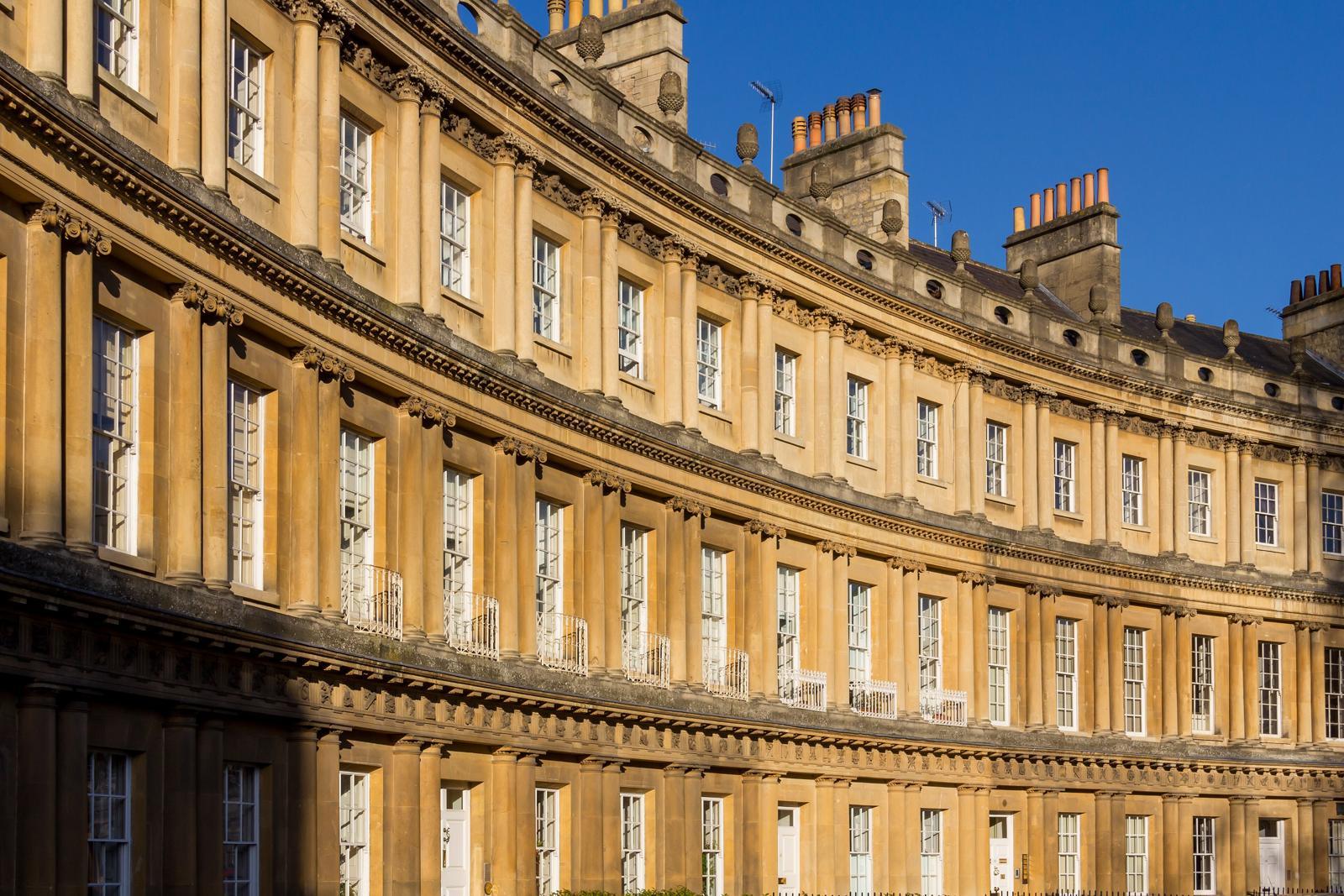
To the north-west of the centre, uphill, lie Bath's most famous set pieces. The Circus is a ring of grand townhouses designed by John Wood the Elder and completed by his son, and the Royal Crescent, a sweeping curve of thirty houses by John Wood the Younger, overlooks Royal Victoria Park. The streets around here, including the Assembly Rooms area, feel stately and quiet, and a stay here puts you in the most photogenic part of the city. The Jane Austen Centre is nearby; the novelist lived in Bath in the early nineteenth century and set parts of Northanger Abbey and Persuasion here.
Pulteney Bridge and Bathwick
Pulteney Bridge, designed by Robert Adam, is unusual in having shops built across it on both sides. Crossing it leads to Great Pulteney Street, one of the grandest streets in the city, and on to Bathwick and the Holburne Museum at the far end. Sydney Gardens behind the museum is a lovely Georgian pleasure garden. This side of the river is generally peaceful and many guest houses here occupy period homes.
Widcombe and the south side
Across the river to the south, Widcombe has a village atmosphere and sits beside the Kennet and Avon Canal, which is popular for towpath walks. Bath Spa railway station is close by, which makes the south side handy if you arrive by train.
Outside the centre
Bath sits in a bowl of hills, and some of the best views come from outlying neighbourhoods and the villages around it, such as Batheaston and Bathford to the east. Staying a little out can mean more space, easier parking and countryside on your doorstep, with a short bus or taxi ride into town. The Bath Skyline walk, a circular route on the hills above the city, gives a superb overview.
When to go
Bath is busy all year. The Christmas Market, held in the streets around the Abbey, draws large crowds in late November and December, and summer weekends are popular. Weekdays in spring and autumn are often the most relaxed time to explore. As in any World Heritage city, it pays to book early for weekends and festivals.
Getting there
Bath Spa station is on the Great Western Main Line, with direct trains from London Paddington typically taking around an hour and a half. Bristol is a short train ride away, and Bristol Airport is the nearest airport. If you are driving, the city runs Park and Ride sites, which are often easier than finding central parking.
A few practical tips
Bath is hilly, and the walk from the centre up to the Royal Crescent and Lansdown is steeper than it looks on a map, so allow time and comfortable shoes. Many of the city's guest houses are in listed Georgian buildings, which is a large part of their charm but can mean narrow staircases and no lift, so ask if that matters. Breakfast is often included at smaller places, and owners are usually happy to recommend restaurants and walks. Contact the property directly to ask about parking permits, as on-street parking in residential areas is often restricted.
Combining Bath with the Cotswolds
Bath sits at the southern end of the Cotswolds, and the Cotswold Way national trail runs between Chipping Campden in the north and Bath Abbey. That makes the city an excellent start or finish to a tour of the region. See our Cotswolds guide for villages and towns to visit, or our UK city breaks guide for more cities to combine with Bath. When you are ready, browse Bath listings and contact properties directly.
Details such as opening times, transport and events change. Please check with venues, operators and properties before you travel. HotelGoGo is an independent directory: we do not take bookings or commission.